


Brick Blast - Brick Breaker
4.8745.00 Reviews
App Specs
- Version
- 1.9.0
- Updated On
- License
- Free
- Downloads
- 5,000,000+
- Developer
- Easybrain
- Categories
- Puzzle
- Platform
- Android
Screenshots
 Analysis by AppCompare
My first impression of Brick Blast - Ball Breaker is that it knows exactly what kind of break it wants to provide: a bright, brisk puzzle game built around aiming, watching a shot unfold, and deciding what to try next. I like that the central idea is easy to grasp without making every turn feel automatic. It suits the small gaps in a day, though the repeated aiming and clearing can become familiar if you want a game with a story or a much wider range of activities.
A bright, uncluttered world for quick decisions
The visual language is cheerful and direct. Bricks are the immediate focus, while bold colors and clear movement help the action read at a glance. That matters in a game where a shot can pass through several targets: I want to follow the ball and understand why a board changed, not lose track of the action in decorative clutter. The presentation gives the puzzle a lively feel without asking me to learn a complicated setting first.
That simplicity is also a trade-off. If you enjoy games that build a distinctive world through characters, locations, or a narrative, this is not the kind of experience I would choose for that purpose. Its personality comes from the familiar pleasure of lining up a shot and seeing a crowded board open up. I find that focus refreshing when I want a straightforward diversion, but it may feel thin during a long session if visual variety and discovery are what keep you playing.
Sound and pacing that make a round easy to follow
The sound helps underline the small payoffs: a clean hit, a run through several bricks, and the satisfying finish of a target breaking. The upbeat music supports the lively presentation, though I would lower or mute it when playing somewhere quiet or when I want to concentrate on the angles. The game’s rhythm is less about a continuous rush than about alternating between a quick decision and a short burst of action.
That stop-and-watch cadence is useful on a short break. I can line up a shot, see how it changes the board, and then make another decision rather than needing to remember a long sequence of moves. The flip side is that the same loop can feel repetitive if I play for too long without a clear personal goal. I get more out of it when I treat a session as a handful of puzzles instead of expecting a deep, evolving campaign.
Gameplay: A Simple Yet Engaging Concept
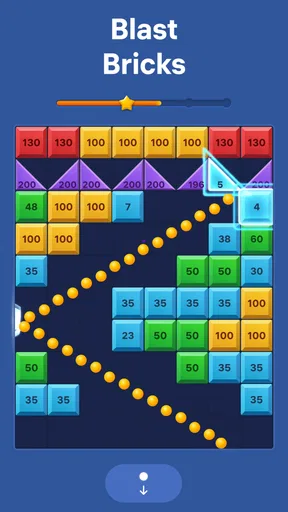
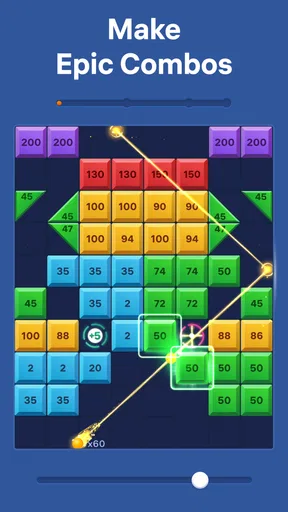
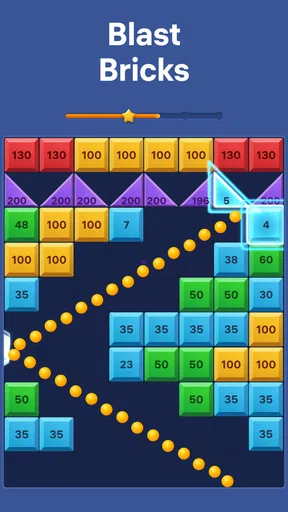
The premise of the game is pretty straightforward. You’re given a bunch of bricks and your job is to smash them using a ball. Sounds simple, right? Well, that’s where Brick Blast - Ball Breaker hooks you. The bricks have numbers on them, indicating how many times they need to be hit before they disappear. You’ve got to angle your shots perfectly to maximize the number of bricks you hit in one go. It’s like playing pool but in a digital, more colorful realm.
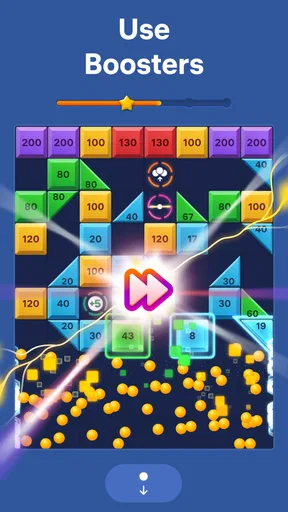
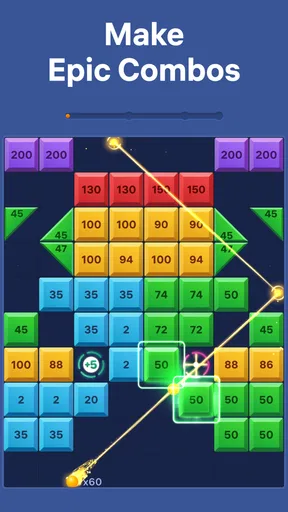
What I loved is how the game gets gradually more challenging. The bricks start stacking up and you need to collect power-ups to keep up. These power-ups can give you extra balls or even boost your ball’s power, which is a lifesaver when the screen is crowded with bricks.
Worth Reading Before You Choose

EA SPORTS FC Mobile 26 Is a Bigger Football Game, but It Takes Time

Flipboard Shows What News Apps Must Do Beyond the Feed

Switching to Android Auto Means Rethinking Your Driving Routine

Google Calendar Makes a Crowded Week Easier to Manage

Ludo King Makes the Most of the Minutes Between Plans

Baby Panda World Brings Quick Play to Modern Phones, but Its Game Library Feels Busy
Making each shot count
The most useful habit I’ve developed is to look beyond the nearest brick before choosing an angle. A direct hit can seem tempting, but a route that lets the ball travel through a busy area may do more useful work before it returns. When the board is crowded, I try to judge not just which number is easiest to reduce, but whether a shot can create room for the following turn. It turns aiming into a small planning exercise rather than a reflex test alone.
Power-ups are best treated as tools for a specific problem, not as a reason to stop thinking about the board. Extra balls can help when targets need repeated hits, while a stronger ball can make a difficult stretch feel more manageable. I would pay attention to what is actually threatening the board before relying on either kind of boost. Using a helpful effect at the right moment can matter more than simply firing as soon as it appears.
For a practical routine, I would take a second to scan the whole layout, choose a route that reaches more than one target, and then watch where the ball spends its time. That final part is useful: the result of a shot gives you information for the next decision. If a route leaves a dense cluster largely untouched, change your approach rather than repeating the same angle out of habit. The puzzle is most satisfying when each turn responds to the board you have, not the one you hoped to get.
Where it fits among puzzle games
Compared with a match-three puzzle, this asks more of your spatial judgement and less of your ability to spot matching patterns. Compared with a traditional block puzzle, it has a more active, kinetic feel: you choose an angle, then follow the consequences as balls ricochet through the field. That makes it a good choice for someone who wants a visual aiming challenge without committing to a long story or a complex ruleset. If you prefer puzzles where every move is deliberate and the board changes only after careful placement, a slower logic game may suit you better.
I would also separate it from games designed around fast reactions. The appeal here is not simply tapping quickly; it is making a considered shot and seeing whether its path pays off. That gives it a calmer edge than a reflex-heavy arcade game, although a busy board can still create pressure. The right alternative depends on what you want from a short session: choose this for angles and cascading hits, a word or number puzzle for quieter concentration, or a match-based game when spotting combinations is the main pleasure.
Graphics and Sound: Keeping It Fun and Fresh
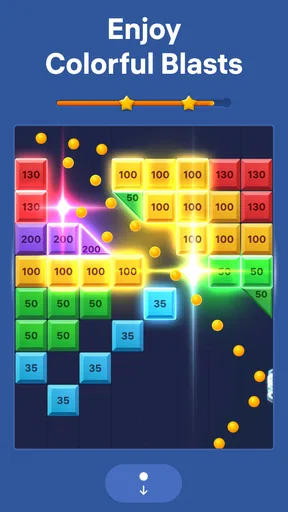
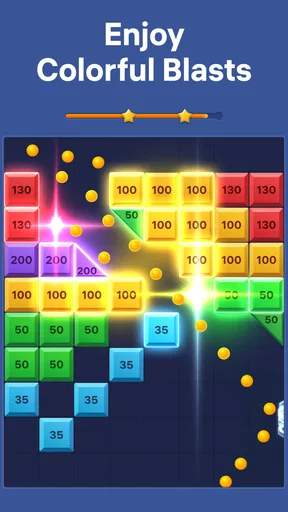
Visually, the game is a treat. The colors are vibrant, and the animations are smooth, which makes the game not just fun to play but also nice to look at. The sound effects are on point too. There’s something satisfying about hearing the bricks shatter, and the background music is upbeat enough to keep you in the zone without being distracting. It’s clear that the developers put a lot of thought into making the game aesthetically pleasing and engaging.
What Makes It Addictive?
Now, onto why you might find yourself hooked. The game cleverly integrates elements of strategy and quick reflexes. Each level requires you to think a few steps ahead, deciding which bricks to target first and how best to use the power-ups you collect. The increasing difficulty keeps you on your toes, and there’s always that “just one more round” feeling when you’re playing.
Its pull is strongest when I set myself a modest target, such as making a cleaner shot than last time or staying composed when the board gets crowded. That gives a short session a satisfying endpoint instead of letting the loop run on simply because another round is available. I would not count on it to provide a new kind of challenge every time; the pleasure is in refining your judgement within a focused format.
The game is free to download, and its 4.7 average from around 49,000 ratings suggests that many players enjoy that accessible puzzle loop. It has passed one million installs, while its Teen age rating is worth keeping in mind if you are choosing games for a younger player. Easybrain is the developer, and version 1.6.0 is the current release. The game is free, but in-app purchases are listed at $14.99 per item, so I would check the purchase prompt carefully rather than assuming every optional item is inexpensive.
A useful fit for ordinary breaks
Picture waiting for a takeaway order or sitting through a short commute as a passenger: this is the sort of moment when I would open the game, play a few turns, and put it away without needing to follow a plot. Its clear core action makes it approachable for someone who has not played a ball-breaker puzzle before. It is also a reasonable pick for players who like improving a shot through trial and observation, rather than memorising a large set of rules.
I would skip it if you need a game that feels rewarding with the sound completely off and depends on visual variety, a rich story, or a broad collection of modes. I would also be cautious about starting a round when I have only a few seconds: even a simple game can invite another attempt once I want to improve the result. The best use case is a relaxed pause with enough time to finish a small stretch, not a task that needs my attention every few moments.
Room for Improvement
While I’m a big fan of the game, there are a few things I think could be improved. Sometimes, the ads can be a bit intrusive, popping up between levels and interrupting the flow. However, there’s usually an option to remove ads via in-app purchases if they get too annoying. It would also be great to see more variations in the power-ups and maybe some themed levels to keep the content fresh as you progress through the game.
That interruption matters more to me than it might in a game with longer stages, because this one’s appeal depends on keeping a clean rhythm between decisions. If an ad breaks my concentration, I may forget what I wanted to try next. I would avoid treating a purchase as necessary just to enjoy the basic puzzle; instead, decide whether the interruptions bother you enough to justify spending. Since individual in-app purchases are listed at $14.99, I would review the exact item and price shown before confirming anything.
Another limitation is that the core pleasure stays tightly tied to aiming, brick durability, and the way balls travel through the board. That focus makes the game easy to understand, but it also means it is not an ideal choice when I want a fresh mechanic every few minutes. The more I enjoy adjusting angles and learning from each result, the longer the loop holds my attention. If that particular satisfaction does not appeal, more varied puzzle games are likely a better use of your time.
Atmosphere verdict
Overall, Brick Blast - Ball Breaker is a fantastic game if you’re looking for something that’s easy to pick up but challenging enough to keep you engaged for hours. Whether you’re trying to beat your high score on a short break or diving into a longer gaming session, it offers a satisfying experience that keeps pulling you back in. So, if you haven't tried it yet, I’d say give it a go. Who knows, you might just find your next favorite mobile game!
My recommendation is more specific: try it if the idea of planning a ball’s route sounds enjoyable, and judge it by whether the board keeps giving you interesting choices rather than by how many hours it can occupy. I like the clear visual feedback and the compact turn-to-turn rhythm, but I would choose another puzzle game when I want story, extensive variety, or uninterrupted play. For a free-to-start brick-breaking diversion from Easybrain, it has a coherent mood and an easy entry point; just keep the purchase prompts and the possibility of ads in mind, and let your own appetite for this focused loop decide how long it earns a place on your phone.
Pros
- Engaging and addictive gameplay.
- Simple controls
- easy to learn.
- Vibrant and colorful graphics.
- Regular updates with new levels.
- Offline play available.
Cons
- Ads can be intrusive at times.
- Limited power-ups without purchase.
- Occasional lag on older devices.
- In-app purchases can be pricey.
- No multiplayer mode available.
FAQs for Brick Blast - Brick Breaker
What is the main objective of Brick Blast - Ball Breaker?
The main objective of Brick Blast - Ball Breaker is to break all the bricks on the screen using a limited number of balls. Players must strategically aim and launch the balls to hit and destroy the bricks before they reach the bottom. Each level presents new challenges with different brick arrangements and obstacles.
Is Brick Blast - Ball Breaker free to play?
Yes, Brick Blast - Ball Breaker is free to download and play. However, it does offer in-app purchases, which can enhance gameplay by providing additional power-ups or removing ads. Players can enjoy the core experience without spending money, but optional purchases may enrich the experience.
Can I play Brick Blast - Ball Breaker offline?
Yes, Brick Blast - Ball Breaker can be played offline, making it a great option for entertainment when you don't have access to the internet. However, certain features, such as in-app purchases or leaderboard updates, will require an internet connection.
What are the system requirements for Brick Blast - Ball Breaker?
Brick Blast - Ball Breaker is designed to be compatible with most modern Android and iOS devices. Typically, it requires iOS 9.0 or later for Apple devices and Android 5.0 or higher for Android devices. It is advisable to check the specific app store listing for detailed compatibility information.
Are there any multiplayer options in Brick Blast - Ball Breaker?
Brick Blast - Ball Breaker is primarily a single-player game focused on individual skill and strategy. While it doesn’t offer direct multiplayer options, players can compete against friends by comparing scores on online leaderboards, fostering a sense of friendly competition.


